
Mozzarella is the cheese most people picture when they think of pizza: that creamy melt, the stretchy pull, and the mild flavor that lets sauce, crust, and toppings shine. But not all mozzarella behaves the same in the oven.
If you’ve ever wondered why one pizza has soft white “puddles” of cheese while another has a smooth, even blanket of melt, the answer is usually this: fresh mozzarella vs low-moisture mozzarella. This guide breaks down what each type is, how they bake, and why pizzerias choose one (or both) depending on the pizza.
For more cheese basics beyond mozzarella, start at our parent hub: Pizza Cheese Guide.
What Is Mozzarella Cheese?
Mozzarella is a classic Italian cheese known for its mild flavor and excellent melting qualities. Traditionally, it’s a fresh, tender cheese. Today, most mozzarella used for pizza is made from cow’s milk, and it comes in two main pizza-friendly forms:
Fresh mozzarella (high moisture, soft, delicate)
Low-moisture mozzarella (drier, firmer, designed for consistent melting)
Both are “real mozzarella,” but they perform very differently on a pizza.
Why Mozzarella Is the Most Popular Pizza Cheese
Mozzarella is the go-to pizza cheese for a few simple reasons:
It melts beautifully without turning oily or heavy when used correctly
It stretches in a way other cheeses don’t
Its mild flavor doesn’t overpower sauce or toppings
It balances well with classic pizza ingredients like tomatoes, basil, and olive oil
That balance is exactly why mozzarella is the anchor cheese on everything from a simple slice to a specialty pie—especially when paired with traditional flavor builders like basil.
Fresh Mozzarella for Pizza
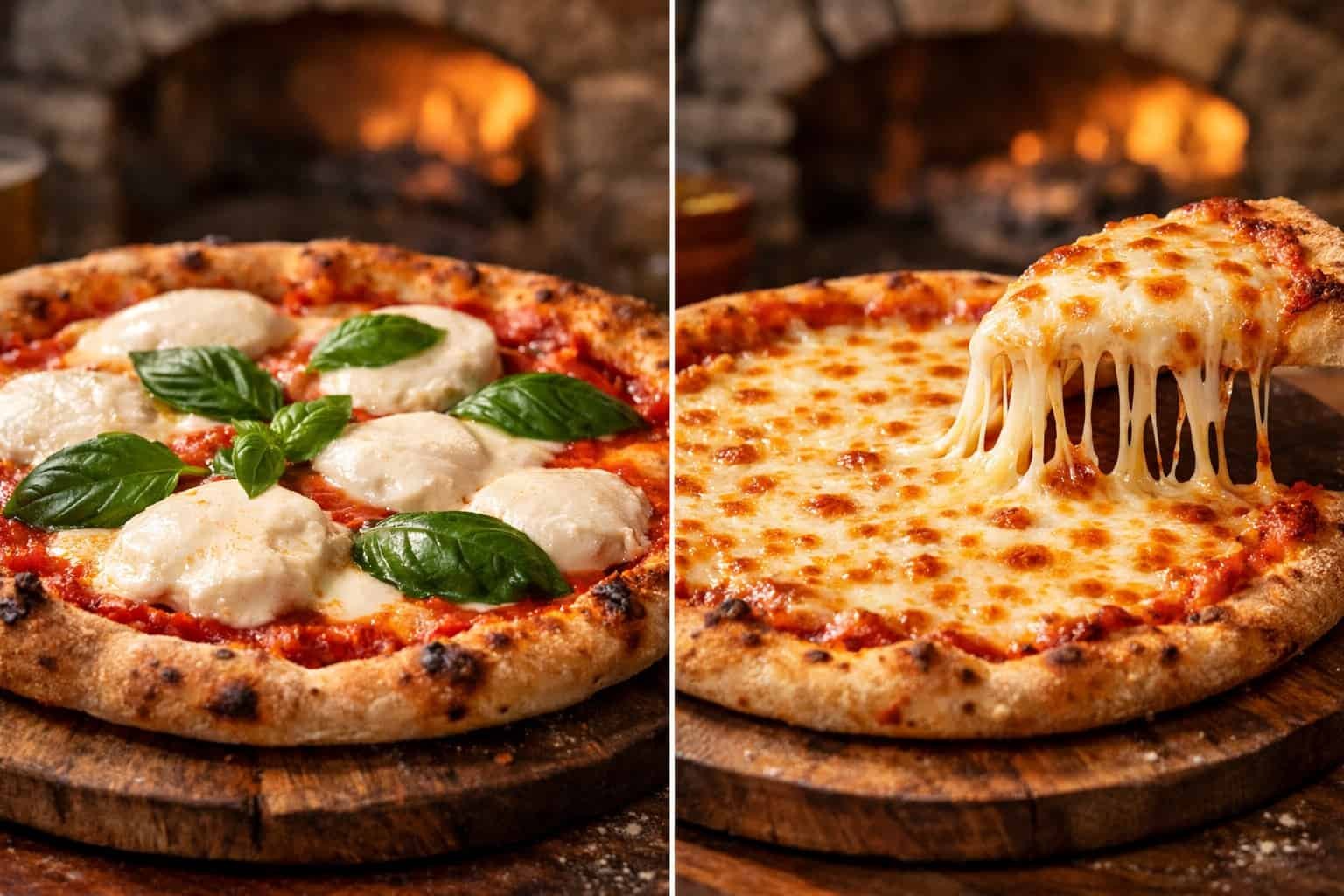
Fresh mozzarella is the soft, tender mozzarella you’ll often see sold in balls, sometimes packed in liquid. On pizza, it creates that signature look: bright white melted pools with a creamy bite.
What it’s like
High moisture content
Soft texture
Creamy, fresh dairy flavor
How it bakes
Fresh mozzarella melts quickly, but it also releases water as it heats. That’s why fresh mozzarella pizzas can look a little “juicy,” especially if the cheese is sliced thick or added too heavily.
Common fresh mozzarella results:
Creamy melt with soft pockets
More moisture on the surface
A lighter, delicate cheese presence
Best used for
Fresh mozzarella shines when the pizza is built to highlight it:
Artisan-style pies
Lighter toppings (so the cheese stays the star)
Short bake times (less time for moisture to flood the pizza)
A classic example is a Margherita-style approach where the flavors are simple and clean—tomato, mozzarella, and basil. If you love that style, you’ll enjoy our breakdown of Margherita Pizza.
Low-Moisture Mozzarella for Pizza
Low-moisture mozzarella is mozzarella that has been dried out more intentionally. It’s firmer, easier to shred, and—most importantly for pizza—built for controlled, consistent melting.
What it’s like
Lower water content
Firmer texture
Mild, slightly saltier “pizza shop” flavor
How it bakes
Low-moisture mozzarella melts into an even layer and browns more predictably. That’s a big reason most pizzerias rely on it: it’s easier to get the same great result every time.
Common low-moisture results:
Even coverage across the pizza
Reliable stretch and melt
Less surface water (less sogginess risk)
Best used for
Low-moisture mozzarella is ideal when consistency matters:
Classic pizza styles
Heavily topped pizzas
Longer bake times
Slices and pies that need structure from crust to topping
Fresh vs Low-Moisture Mozzarella: Key Differences
Here’s the simplest way to compare them—pizza-first, no chef jargon:
Moisture
Fresh: high moisture, can release water
Low-moisture: lower moisture, stays controlled
Melt
Fresh: melts fast into creamy pools
Low-moisture: melts evenly across the pie
Flavor
Fresh: milky, delicate, “fresh dairy” taste
Low-moisture: mild but a bit more pronounced, classic pizzeria profile
Appearance
Fresh: white puddles, artisan look
Low-moisture: smooth blanket, even browning
Best use
Fresh: simple pies, short bake, light toppings
Low-moisture: classic pies, heavy toppings, consistent slices
Which Mozzarella Is Better for Pizza?
The honest answer: it depends on the pizza you want.
Choose fresh mozzarella when:
You want a lighter, more delicate pizza
You love creamy pockets of cheese
The toppings are minimal and fresh flavors matter most
Choose low-moisture mozzarella when:
You want even melt and dependable results
You’re building a heavily topped pizza
You prefer the classic pizzeria-style slice experience
In other words, fresh mozzarella is about highlight and simplicity, while low-moisture mozzarella is about structure and consistency.
Many great pizzas use one or the other intentionally—and sometimes, the best balance comes from using both in the right proportions.
If you’re exploring other cheese textures (especially creamy white pies), you may also like: Ricotta Cheese on Pizza.
How We Use Mozzarella on Pizza
At Bella Pizza, mozzarella isn’t treated like “just a topping.” It’s a core ingredient that has to work in harmony with the crust and sauce.
Our focus is always the same:
Balance: cheese should enhance, not drown out, the pizza
Melt quality: we want a satisfying bite and stretch without greasiness
Consistency: the pizza should eat the way it’s meant to—slice after slice
That’s why understanding the difference between fresh mozzarella vs low-moisture mozzarella matters. Different pizzas call for different outcomes: sometimes you want the clean, delicate look of fresh mozzarella; other times you want the reliable, even melt of low-moisture.
For the full context of how mozzarella fits into the bigger cheese picture, visit our Pizza Cheese Guide.
Frequently Asked Questions (FAQs)
Is fresh mozzarella better than shredded for pizza?
Not automatically. Fresh mozzarella can taste creamier and look more artisan, but it also adds moisture. Shredded (usually low-moisture) mozzarella melts evenly and is easier to use for consistent results. “Better” depends on the pizza style and bake.
Why does fresh mozzarella make pizza watery?
Because fresh mozzarella has high moisture content. When it heats, some water releases onto the pizza surface—especially if the cheese is thick-sliced or used heavily.
What mozzarella do pizzerias use?
Most pizzerias use low-moisture mozzarella for its dependable melt, even coverage, and consistent performance—especially on classic pies and slices.
Can you mix fresh and low-moisture mozzarella?
Yes—mixing can create a great balance: creamy pockets from fresh mozzarella with the smooth melt and structure of low-moisture mozzarella. It’s a smart approach when you want both texture and consistency.